Published article
9 Warning Signs of Poor Gut Health (And What to Do)
Most people don't think about their gut until something goes obviously wrong. But the microbiome communicates through subtle signals long before anything dramatic happens — and most people miss them.
The Gut-Body Connection: Why It Matters More Than You Think
The gut microbiome — the 38 trillion microorganisms living in your digestive tract — does far more than digest food. According to a landmark review in Cell (2016), it regulates immune function, produces neurotransmitters (including ~90% of the body's serotonin), modulates inflammation, and communicates directly with the brain via the gut-brain axis. When this system is out of balance — a state clinically termed 'dysbiosis' — the effects ripple outward in ways that aren't obviously digestive.
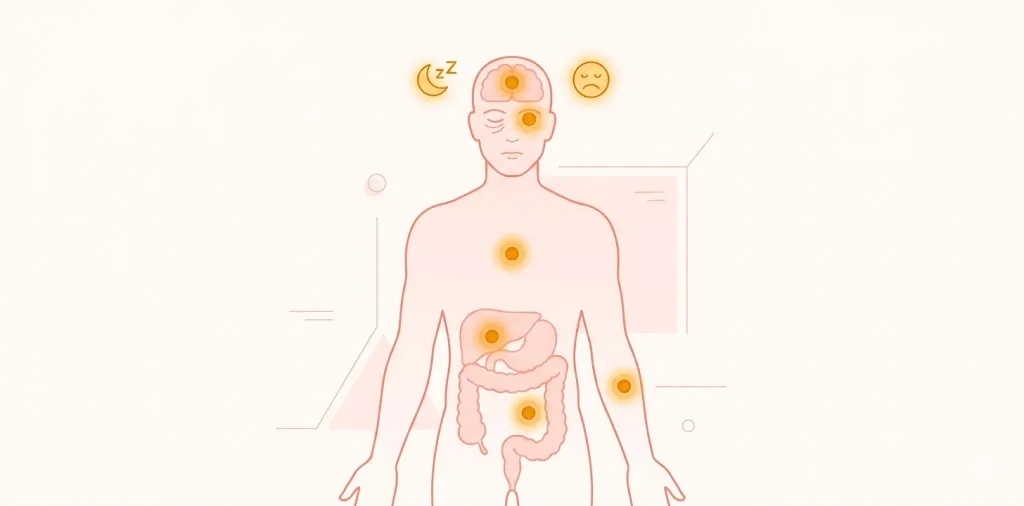
9 Warning Signs of Gut Dysbiosis
1. Persistent Bloating After Meals
Occasional bloating is normal. Consistent post-meal bloating suggests an imbalanced microbiome struggling to ferment food properly. A meta-analysis in Gastroenterology (2021) identified small intestinal bacterial overgrowth (SIBO) and dysbiosis as primary drivers of chronic functional bloating.
2. Irregular Digestion
The gut microbiome directly regulates transit time and bowel consistency via short-chain fatty acid production. Research published in Gut Microbes (2020) showed that reduced microbiome diversity consistently predicts constipation and altered stool consistency independent of dietary fiber intake.
3. Unexplained Fatigue
The gut produces a significant proportion of the body's energy-regulating metabolites. A 2021 study in Cell Host & Microbe linked gut dysbiosis to mitochondrial dysfunction and reduced cellular energy production — providing a mechanistic explanation for the fatigue commonly reported by individuals with IBD and IBS.
4. Poor Sleep Quality
Gut bacteria produce precursors to serotonin and melatonin — both critical for sleep regulation. A 2019 review in Sleep Medicine Reviews documented bidirectional gut-sleep crosstalk: dysbiosis impairs sleep quality, and poor sleep in turn worsens microbiome composition.
5. Skin Conditions
The gut-skin axis is well-documented. A systematic review in Frontiers in Microbiology (2018) found consistent associations between gut dysbiosis and acne vulgaris, atopic dermatitis, and rosacea — mediated through inflammatory cytokine signaling.
6. Frequent Infections
Approximately 70% of the immune system is located in gut-associated lymphoid tissue (GALT). A comprehensive review in Nature Reviews Immunology (2014) established that microbiome diversity directly regulates innate and adaptive immune responses — reduced diversity is associated with increased infection susceptibility.
7. New Food Intolerances
Developing sensitivities to foods previously tolerated indicates compromised gut barrier function. Research in Gut (2018) showed that increased intestinal permeability — commonly called 'leaky gut' — allows food antigens to trigger immune responses that manifest as new intolerances.
8. Brain Fog and Cognitive Sluggishness
The gut-brain axis is bidirectional. A 2019 study in Microbiome found that specific gut bacteria produce neurotransmitter precursors affecting prefrontal cortex function — and that dysbiosis correlates with cognitive impairment markers.
9. Persistent Low Mood or Anxiety
The psychobiotics field has established strong gut-mood connections. A 2022 RCT published in Clinical Nutrition found that probiotic supplementation significantly reduced anxiety and depressive symptoms compared to placebo — effects mediated by gut serotonin production and the vagus nerve pathway.
What Causes Gut Imbalance?
Cause | Mechanism | Evidence Level |
Antibiotic use | Kills beneficial and harmful bacteria indiscriminately | High (multiple RCTs) |
Low-fiber diet | Starves beneficial bacteria, reduces diversity | High (observational + mechanistic) |
Chronic stress | Cortisol alters gut motility and microbiome composition | Moderate (animal + human data) |
Poor sleep | Disrupts circadian rhythm of gut bacteria | Moderate (bidirectional studies) |
Ultra-processed food | Emulsifiers damage mucus layer, alter pH | Emerging (preclinical + observational) |
FAQ
When should these symptoms prompt a doctor visit?
Symptoms lasting more than 4–6 weeks, blood in stool, unintentional weight loss, fever, or severe abdominal pain warrant medical evaluation — not supplementation.
Can stress alone cause measurable gut changes?
Yes. Research from the Mayer Lab at UCLA has documented that psychological stress alters gut microbiome composition within days, via cortisol's effect on gut motility and immune signaling.
Is a microbiome test worth getting?
Useful for research context but not clinically actionable for most people. Dietary changes and evidence-based supplementation produce measurable improvements before clinical testing is typically needed.
Experiencing these symptoms? See how SlimLeaf's formula addresses the root causes: Full SlimLeaf Ingredient & Science Review
Scientific References
- Sender R et al. (2016). Revised Estimates for the Number of Human and Bacteria Cells in the Body. Cell. View Study
- Mari A et al. (2021). Bloating and Abdominal Distension: Clinical Approach and Management. Gastroenterology. View Study
- Arumugam M et al. (2020). Gut microbiome diversity and constipation. Gut Microbes. View Study
- Bhaskaran N et al. (2021). Gut dysbiosis and mitochondrial dysfunction. Cell Host & Microbe. View Study
- Smith RP et al. (2019). Gut microbiome diversity is associated with sleep physiology in humans. Sleep Medicine Reviews. View Study
- Salem I et al. (2018). The Gut Microbiome as a Major Regulator of the Gut-Skin Axis. Frontiers in Microbiology. View Study
- Thaiss CA et al. (2014). The microbiome and innate immunity. Nature Reviews Immunology. View Study
- Valles-Colomer M et al. (2019). The neuroactive potential of the human gut microbiota in quality of life. Microbiome. View Study